
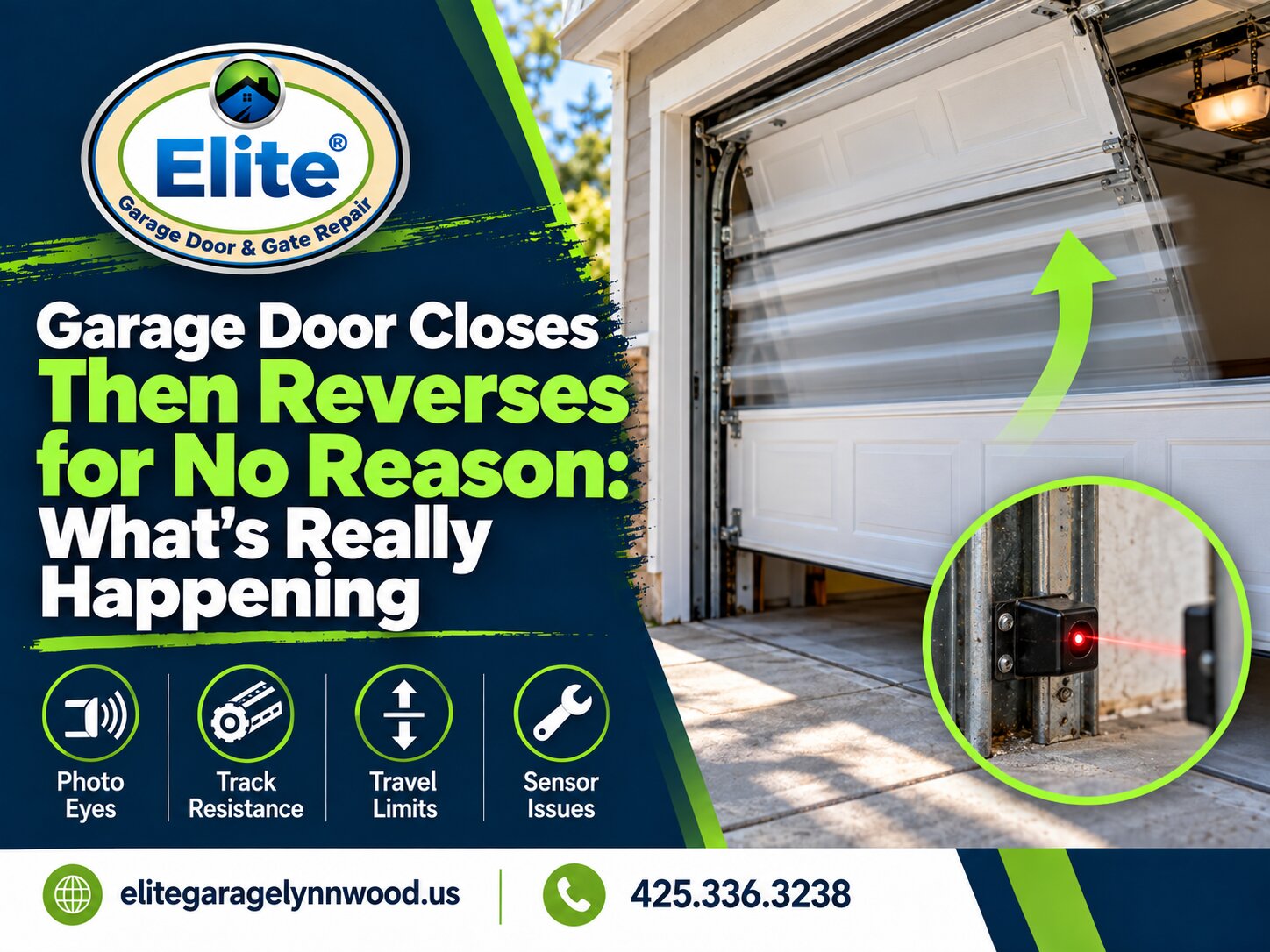
When your garage door closes partway and then reverses back up, it’s almost always triggering the auto-reverse safety feature. This happens when the photo-eye sensors detect an obstruction, when they’re misaligned or dirty, or when internal opener settings need professional adjustment.
This frustrating problem stops you from securing your home and leaving for work. Let’s walk through what’s really happening and what you can safely check yourself before calling for professional help.
Table of Contents
How the Auto-Reverse Safety System Actually Works
Every garage door opener manufactured since 1993 includes two critical safety features. The photo-eye sensors create an invisible beam across the door opening, and the force-reversal mechanism stops the door if it encounters resistance.
When either system detects a problem, your door reverses to prevent crushing people, pets, or objects. This safety feature saves lives, but it can also trigger false alarms that prevent normal operation.
What to Check First: The Photo-Eye Sensors
The photo-eye sensors sit about six inches above your garage floor, one on each side of the door opening. Start by visually inspecting both sensor units for obvious problems.
Look for dirt, cobwebs, or moisture on the sensor lenses. Pacific Northwest rain and humidity can create condensation on the lenses, especially during Lynnwood’s wet fall and winter months.
Check if the sensors are pointing directly at each other. A small indicator light on each sensor (usually green or red) shows alignment status. If one or both lights are off or blinking, the sensors aren’t communicating properly.
Common causes of misalignment include vibration from regular door operation, accidental bumps from bikes or yard equipment, or settling of your home’s foundation over time. Snohomish County’s clay-heavy soil can shift slightly with seasonal rain cycles, sometimes affecting sensor brackets mounted to door frames.
Can You Test the Auto-Reverse Function Safely?
Yes, and you should test it regularly. Place a solid object like a roll of paper towels or a cardboard box in the door’s path. Press your wall button or remote to close the door.
The door should reverse immediately when it contacts the object. If it doesn’t reverse or pushes the object for more than a second or two, your opener needs professional service right away.
Never use your hand, foot, or body to test the auto-reverse. Always use an expendable object that won’t be damaged.
When the Sensors Look Fine But the Problem Continues
If your sensors are clean, aligned, and showing proper indicator lights, the issue likely involves internal opener settings or mechanical problems. The force and travel limit adjustments control how much resistance triggers reversal and where the door stops.
These settings require specialized knowledge and tools to adjust correctly. Incorrect adjustments can create serious safety hazards or damage your door and opener.
Other possible causes include worn rollers binding in the tracks, damaged cables creating uneven tension, or springs losing tension as they age. We diagnose these mechanical issues during service calls throughout Lynnwood, Bothell, Edmonds, and surrounding Snohomish County communities. If your garage door has experienced years of wear and frequent reversal issues, it might be time to explore New Doors that offer improved safety features and modern sensor technology.
Problems Unique to Washington Climate
The Pacific Northwest’s high humidity and temperature swings affect garage door operation in specific ways. Metal tracks and hardware expand slightly in summer heat and contract in winter cold, sometimes affecting door travel and sensor alignment. For tips on seasonal maintenance, check out our guide on Preparing Your Garage Door For Warmer Weather to keep your system running smoothly year-round.
Moisture from our frequent rain can also corrode sensor wiring connections over time. If your garage isn’t well-sealed, dampness affects the electronic components inside your opener unit. If you’re looking to upgrade your garage layout or need more clearance for taller vehicles, consider High-Lift Garage Door Conversions that can also provide an opportunity to install updated sensor systems.
Get Professional Help for Persistent Reversal Issues
If you’ve checked the sensors and the problem continues, it’s time to call for professional diagnosis. We identify the exact cause and make the necessary adjustments or repairs to restore safe, reliable operation.
Don’t disable your safety sensors or try to bypass the auto-reverse system. These features protect your family and prevent serious injuries. If you’re considering replacing your door with a model that better suits your needs and includes the latest safety technology, explore options with our Door Designer tool.
Elite Garage Door & Gate Repair serves Lynnwood and all of Snohomish County with prompt, professional service. We diagnose auto-reverse problems accurately and restore your door to safe operation. Contact us today for expert troubleshooting and repair.