
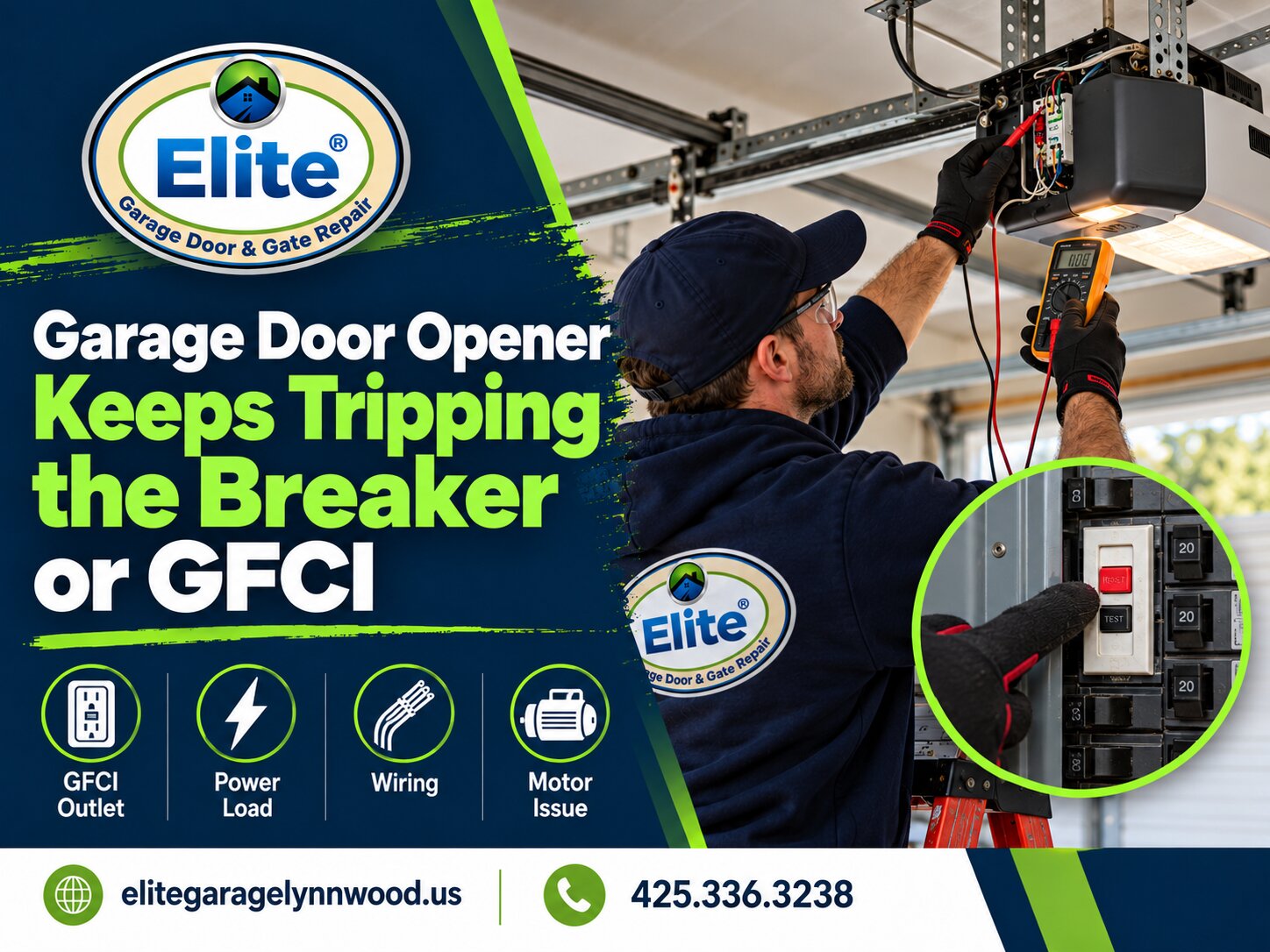
A garage door opener that repeatedly trips your circuit breaker or GFCI outlet signals an electrical overload, a ground fault, or a problem inside the outlet or breaker itself. Before calling a professional, you can safely reset the breaker or GFCI once and check for visible warning signs like burn marks or a warm outlet. If the problem persists or you notice scorching, contact a licensed electrician immediately, as these indicate dangerous electrical faults.
Many Lynnwood homeowners face this issue, especially in older homes where garage circuits may already handle multiple devices. Understanding what you can safely check yourself and when to call for help protects both your opener and your home’s electrical system.
Table of Contents
Why Does My Garage Door Opener Keep Tripping the Circuit Breaker?
Your opener trips the breaker when it draws more current than the circuit can handle or when a ground fault occurs. The most common cause is circuit overload, where too many devices share the same breaker.
In many Snohomish County homes, the garage outlet powers not just the opener but also a refrigerator, power tools, holiday lights, or a vehicle charger. When these devices run simultaneously, the combined load exceeds the circuit’s capacity, forcing the breaker to trip as a safety measure.
Ground faults happen when electricity finds an unintended path to the ground, often through moisture or damaged wiring. Pacific Northwest humidity and rainy climate can contribute to these issues, particularly in detached garages without proper weather sealing.
What You Can Safely Check Before Calling a Professional
Start by resetting the tripped breaker or GFCI outlet once. Locate your home’s electrical panel, find the tripped breaker (it will be in the middle position or switched to “off”), and flip it fully off before switching it back on.
For a GFCI outlet, press the reset button firmly. If it trips again immediately or within a few uses of the opener, stop resetting it and call a licensed electrician.
Next, unplug other devices sharing the garage circuit. If you have a refrigerator, space heater, or power tools plugged into nearby outlets, disconnect them temporarily and test the opener alone. If it operates without tripping, you’ve identified a circuit overload issue.
When to Stop and Call a Licensed Electrician Immediately
Certain warning signs require immediate professional attention. Never ignore burn marks, discoloration, or a scorched smell around outlets or the breaker panel.
If the outlet feels warm or hot to the touch, disconnect power at the breaker and contact an electrician right away. A warm outlet indicates dangerous resistance or loose connections that could lead to electrical fire.
Do not open the garage door opener housing, touch any wiring, or attempt internal electrical diagnostics. These tasks require specialized knowledge and tools that only licensed electricians and trained technicians possess.
How Circuit Overloads Happen in Lynnwood Garages
Many homes in neighborhoods like Alderwood, Melody Hill, and Martha Lake were built decades ago when garages required far less electrical capacity. Today’s homeowners use garages as workshops, home gyms, and storage for electric vehicles.
A standard 15-amp circuit handles approximately 1,800 watts, but a garage door opener alone uses 350 to 600 watts during operation. Add a refrigerator (700 watts), power tools (1,000+ watts), or an EV charger (1,400+ watts), and you quickly exceed capacity.
If overload is your issue, an electrician can install a dedicated circuit for your opener or upgrade your garage’s electrical panel. This prevents repeated trips and makes your garage safer for all electrical needs.
GFCI Outlets and Ground Fault Protection
Washington electrical code requires GFCI protection in garages to prevent shock hazards. These outlets trip when they detect even small ground faults, making them more sensitive than standard breakers.
While this sensitivity protects you from electrocution, it can cause nuisance tripping if moisture seeps into connections or if the opener motor develops internal faults. Persistent GFCI trips, even with nothing else on the circuit, often point to a problem with the opener itself or moisture intrusion in the wiring.
When Your Opener Needs Professional Garage Door Service
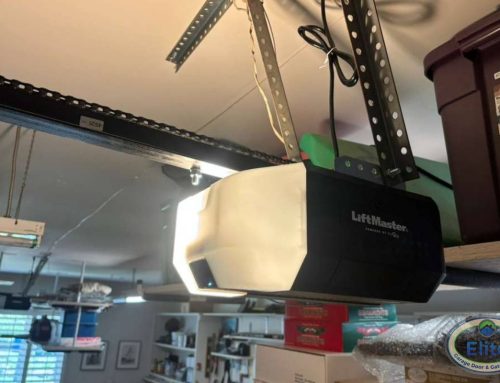
If basic checks don’t solve the problem and an electrician rules out wiring issues, the opener motor may have developed an internal short or failing components. Motors nearing the end of their lifespan often draw excessive current or create ground faults as insulation breaks down.
We repair and replace garage door openers throughout Lynnwood, Bothell, Edmonds, and all of Snohomish County. If your opener continues tripping after electrical issues are resolved, or if you notice grinding noises, intermittent operation, or burning smells from the unit itself, professional service protects your home from potential fire hazards.
Contact Elite Garage Door & Gate Repair for honest diagnostics and expert opener service. We’ll help determine whether repair or replacement makes the most sense for your situation and budget.